
The Dandelions
The Dandelions Appeared and, Almost Immediately, so did the Debate.

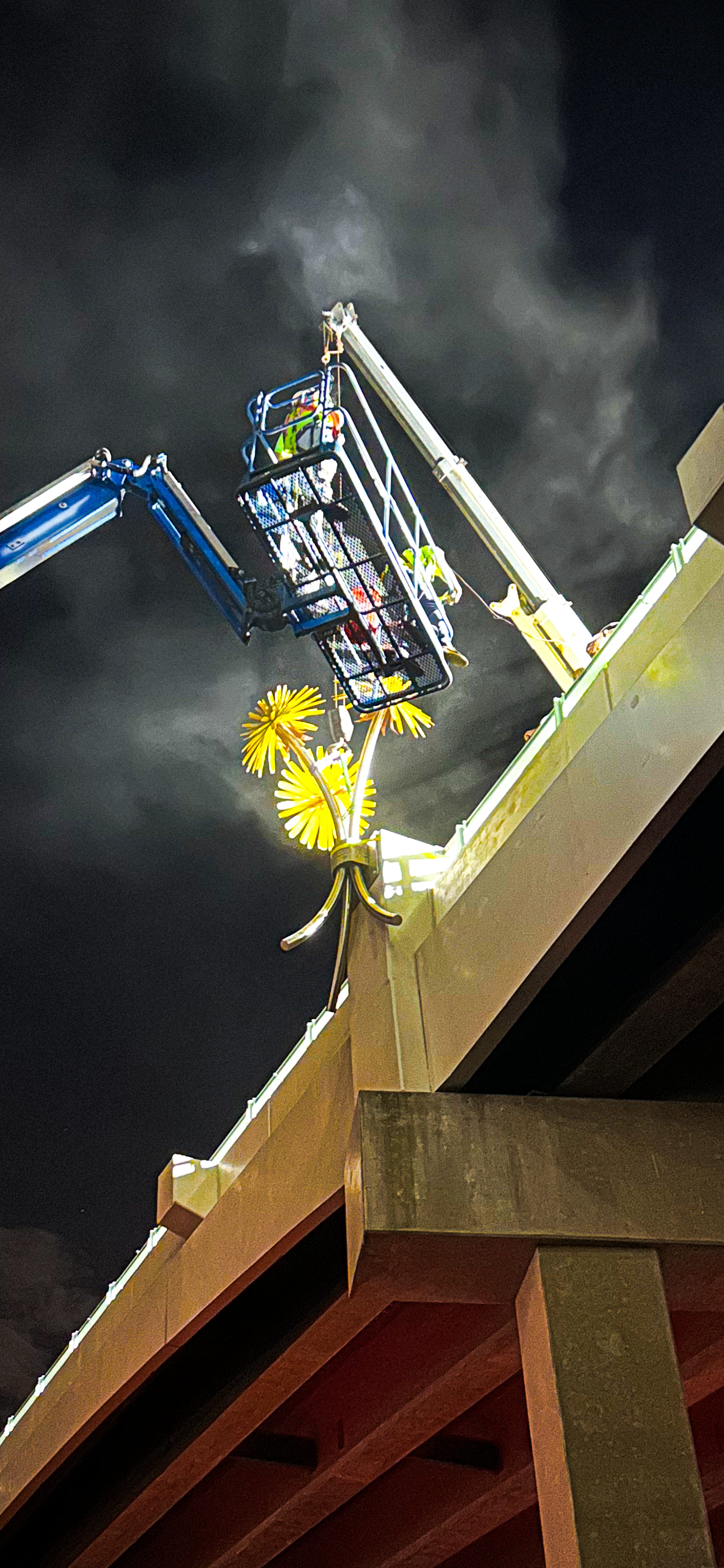
Some people saw art, some a million dollars. Others saw all the things that money could have gone to instead like housing, food, education or potholes.
The argument arrived so quickly as if every public artwork comes with its own shadow conversation. Not about what it is, but about what else it could have been.
I understand the instinct because there is no shortage of need but I have found myself thinking that maybe we ask strange things of art. Like, no one drives past a fire station and asks why it isn’t a library or stands in a park and asks why it isn’t a school.
We understand that cities are ecosystems. That they are built from many different investments serving many different purposes yet when public art enters the conversation, it is often asked to justify its existence against every unmet need.
The dandelions, officially called Invasive Hope, have become the latest catalyst for that debate and it’s fitting because after all, dandelions themselves are controversial. To some they are pesky weeds and to others they are medicinal flowers. The difference is a matter of perspective.
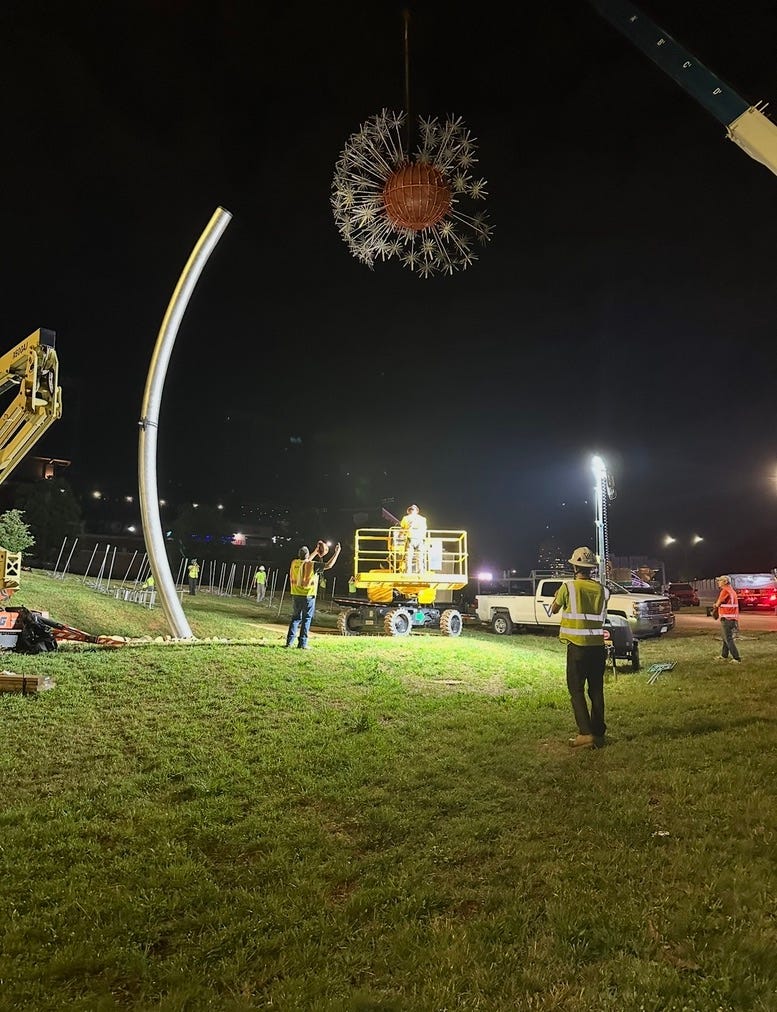
What interests me, however, is not whether people like the sculpture, art is indeed subjective. What interests me is how differently I experience the conversation because when I look at the dandelions, I do not see a line item in a budget.
I see people.
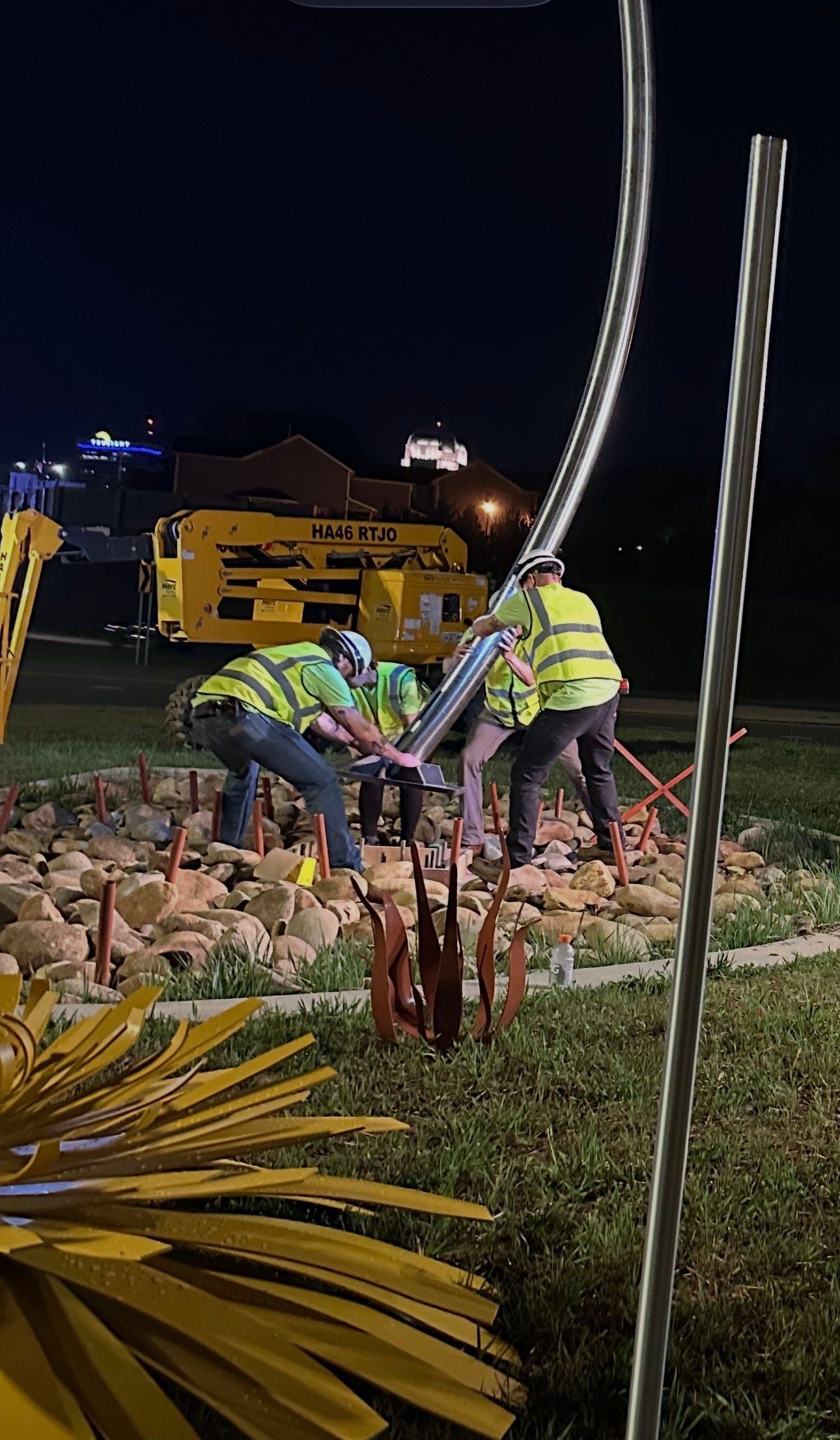
From the Art Hotel, I can practically see the sculptures. They are now a part of the landscape of my daily life, rising above a neighborhood I love and when I look at them, I think of the people who built them.
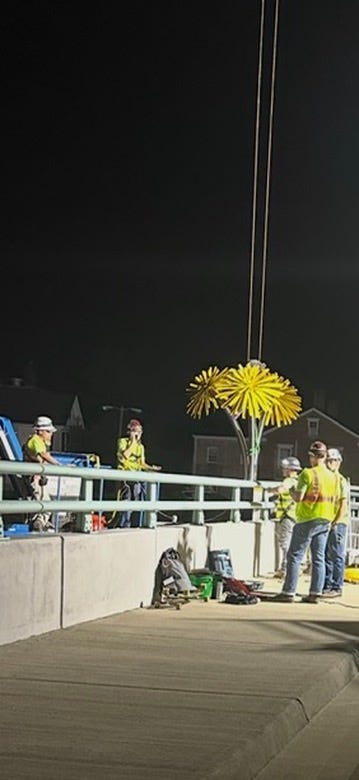
I think of Mark Lamb from Metalmorphosis, who has along with his wife Vikki, supported countless art openings and events over the years. Guests entering the Art Hotel foyer pass beneath a chandelier they created.
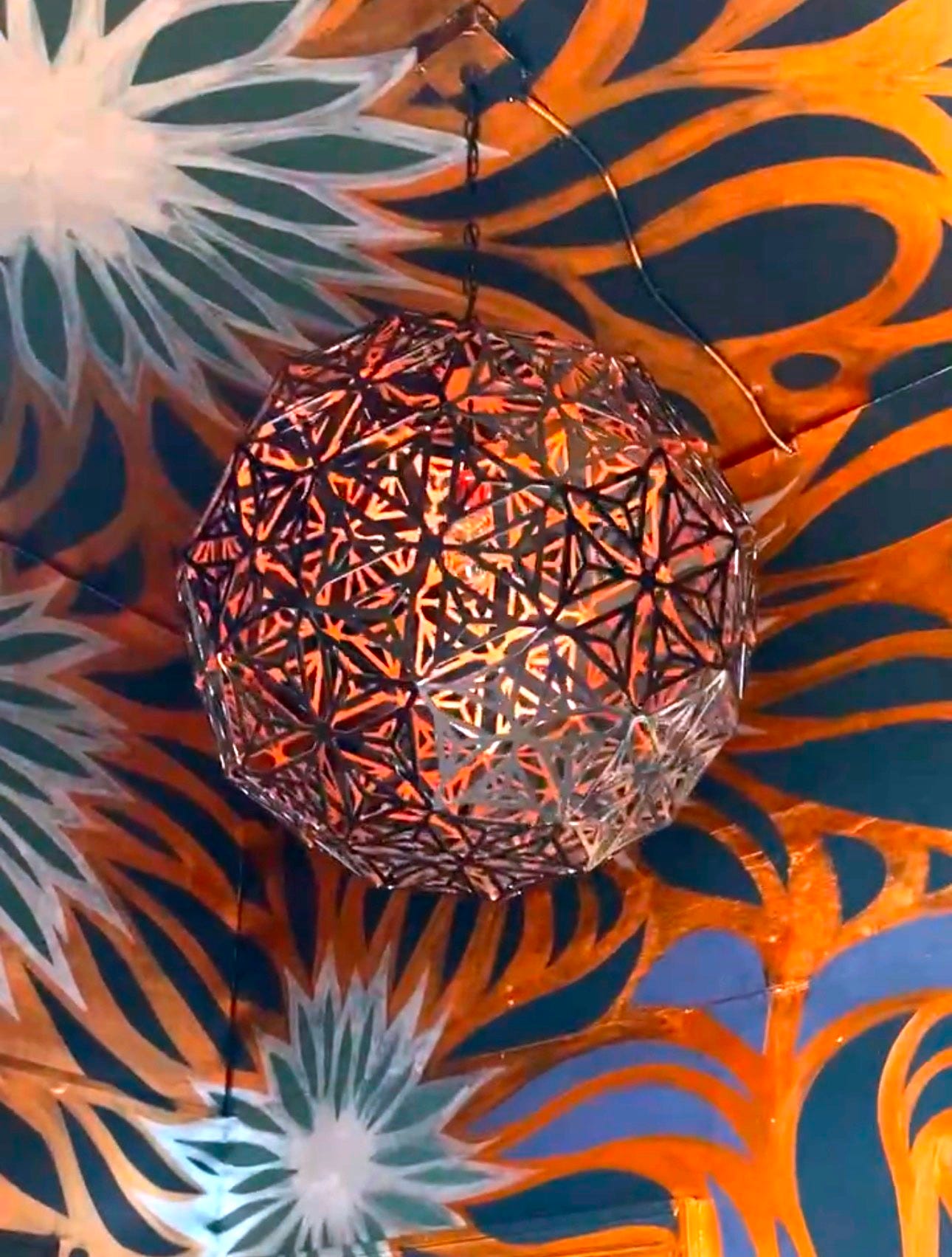
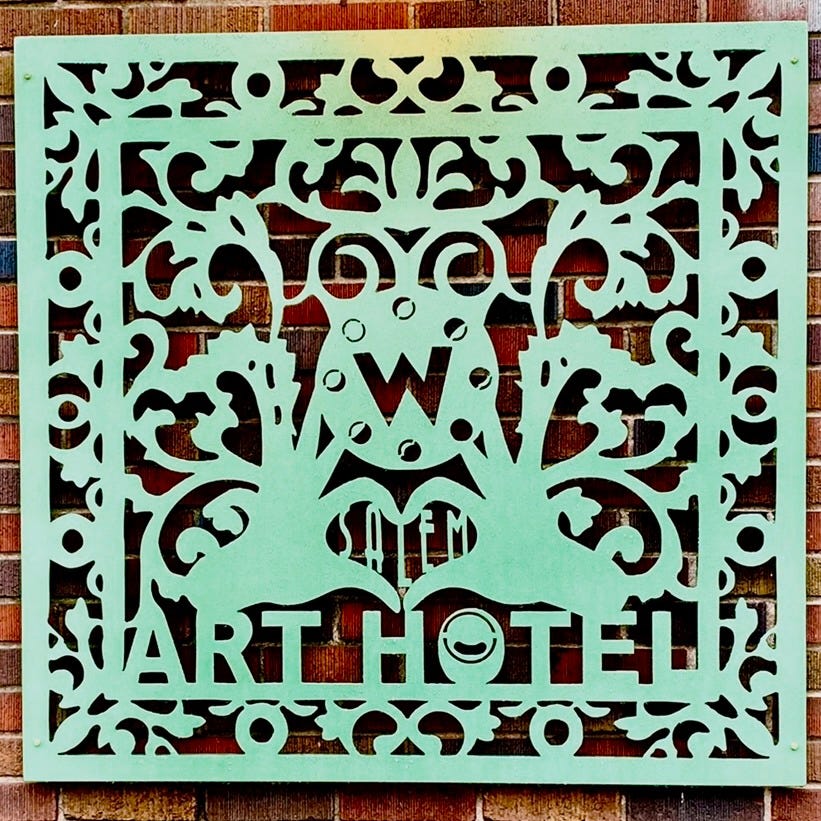
The sign between our front doors, the one that tells visitors they have arrived at West Salem Art Hotel, was beautifully cut by their team.
I think of Josh Pickett, who works there as well. Last year, a stray dog crossed my path. Josh helped find that dog a great home. They and their team machined the stems of the dandelion seeds.
I think of artist Ben Schwab from STITCH Design Shop. Years ago he gave me a table he had built. It is one of the heaviest pieces of furniture I have ever encountered. It’s a beautiful puzzle of iron and wood that still lives in the Art/partment today. STITCH once shared a floor with original Art Hotel above Krankies Coffee. STITCH Design Shop created the initial concept drawing and rendering.
I think of Artist Drew Gerstmyer, whose kind encouragement helped carry me through the transition from one Art Hotel to the next.
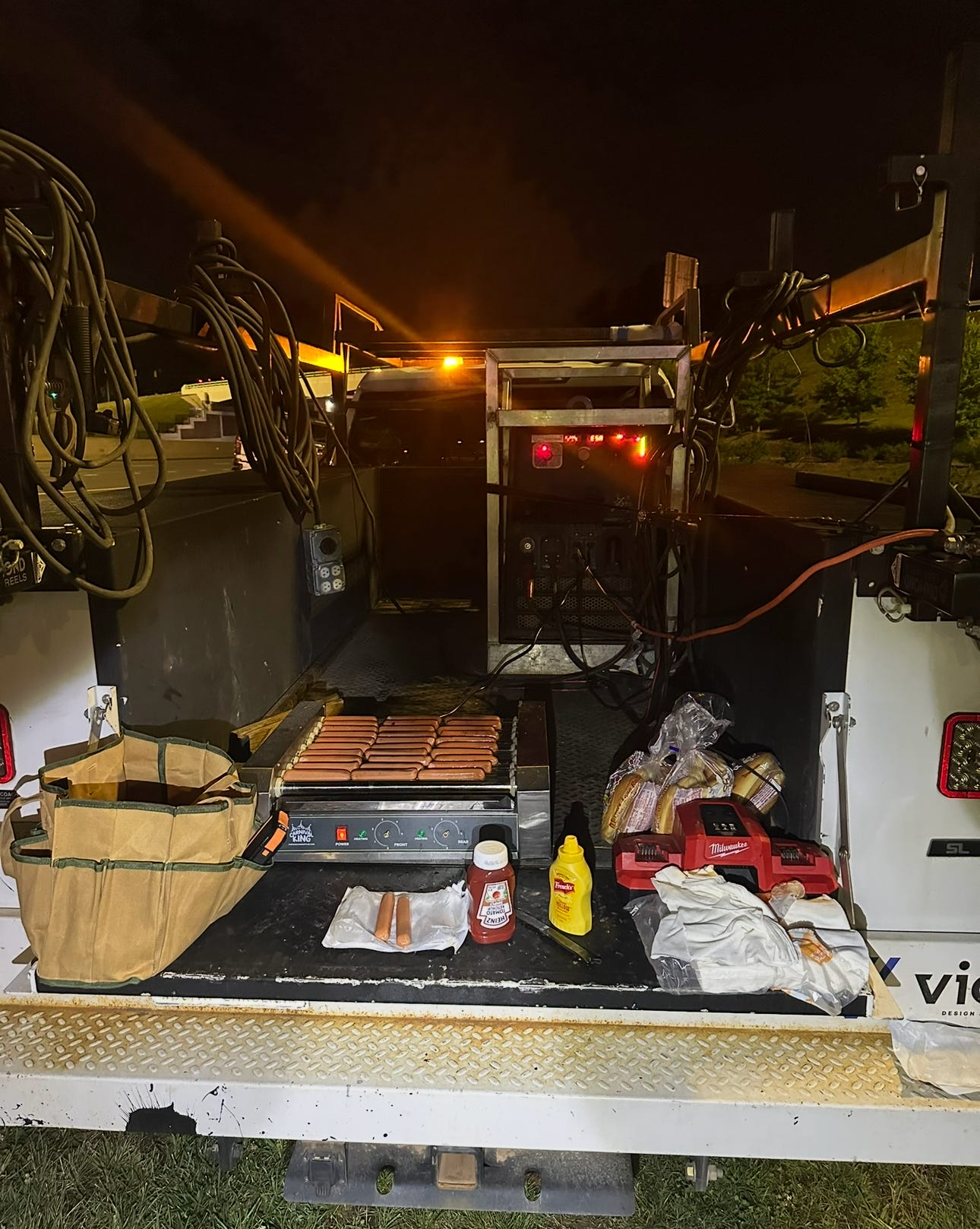
I think of my dear friend Dave “Delbert” Franklin who cooked hotdogs for everyone out of the back a truck during the overnight installation.
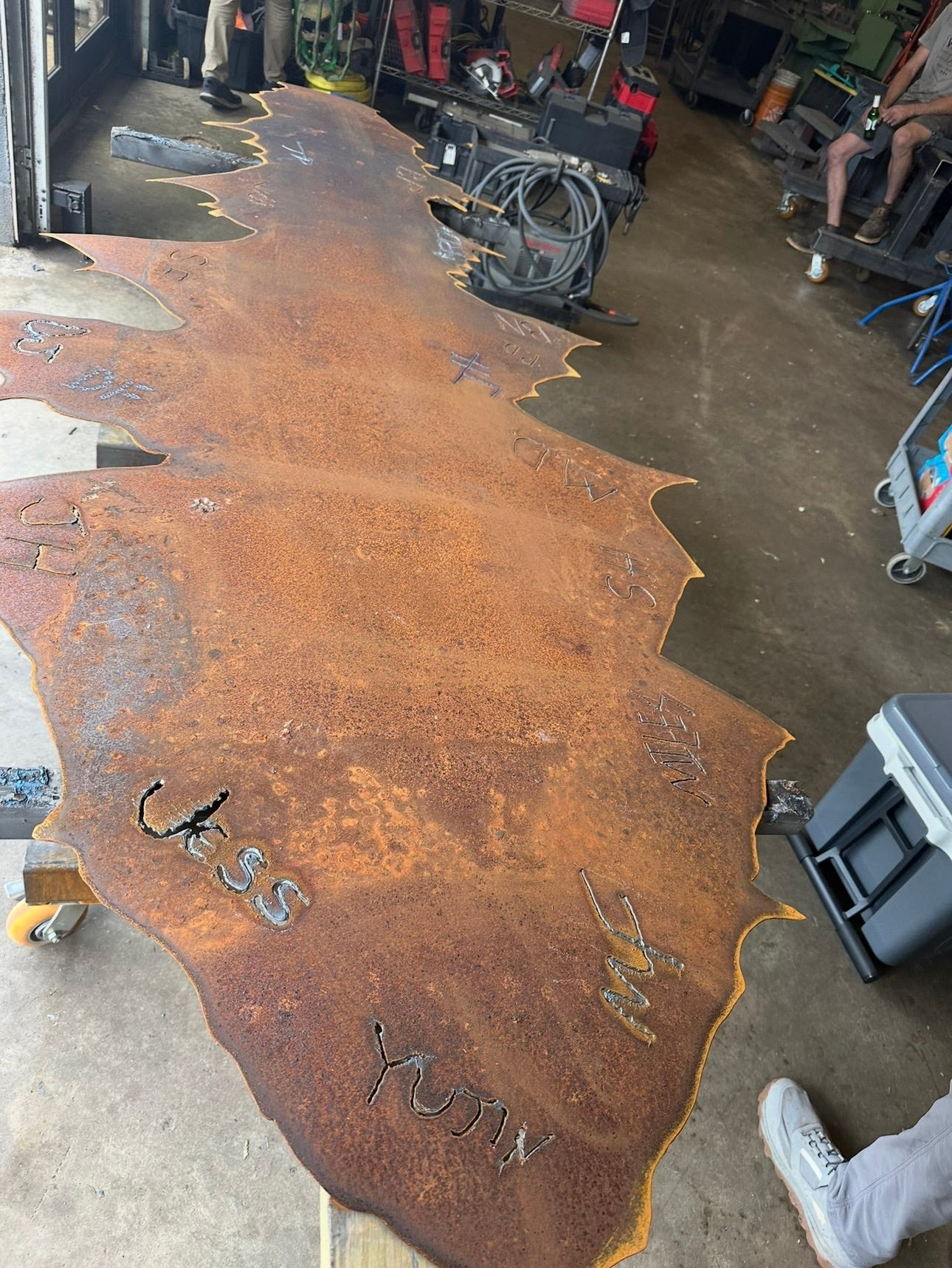
I think of Andrew Viator, whom I knew before his shop existed, before the hundreds of creative and wild projects, now tucked under his belt. Through welding, sanding, cutting and installing Viator Construction’s talented team, many whom I know personally, hit this project out of the park. Here is one of the Dandelion leaves that everyone involved in the project got to sign with a welding torch.
And I think about how remarkable it is that Winston-Salem chose local people to build something so ambitious.
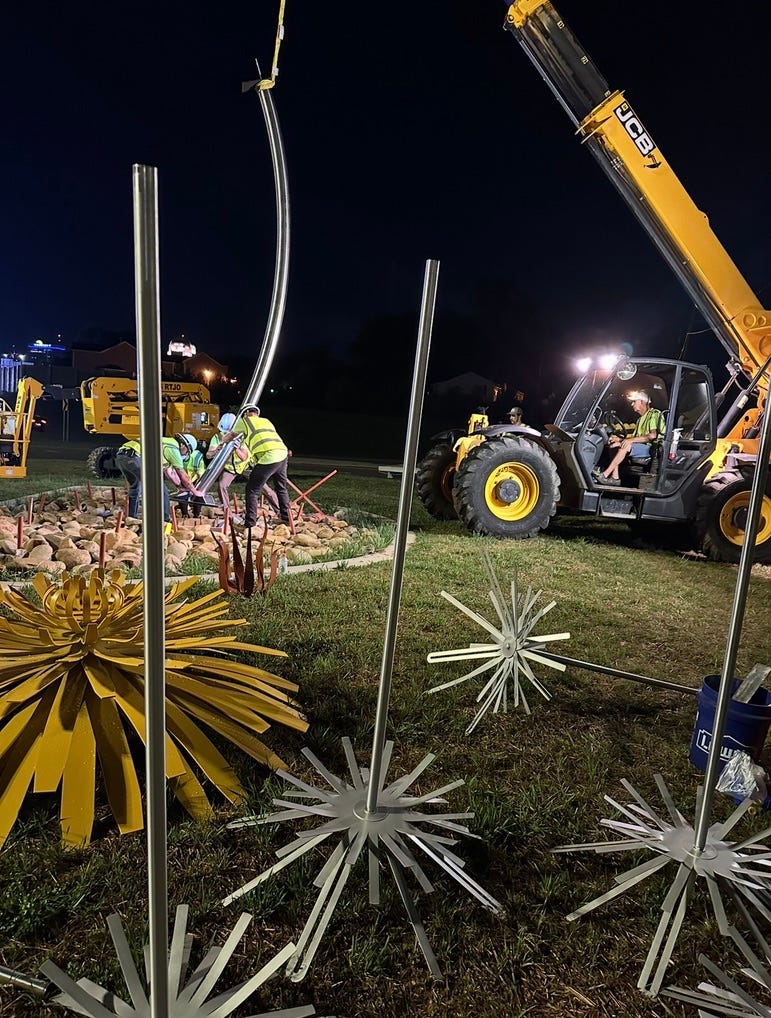
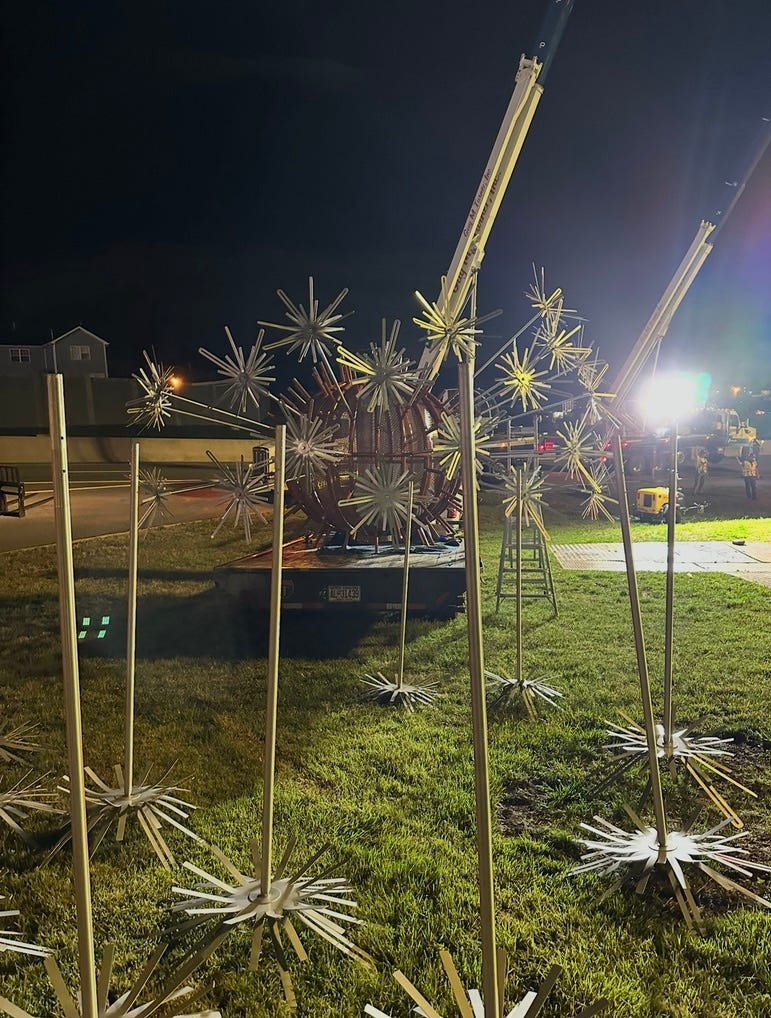
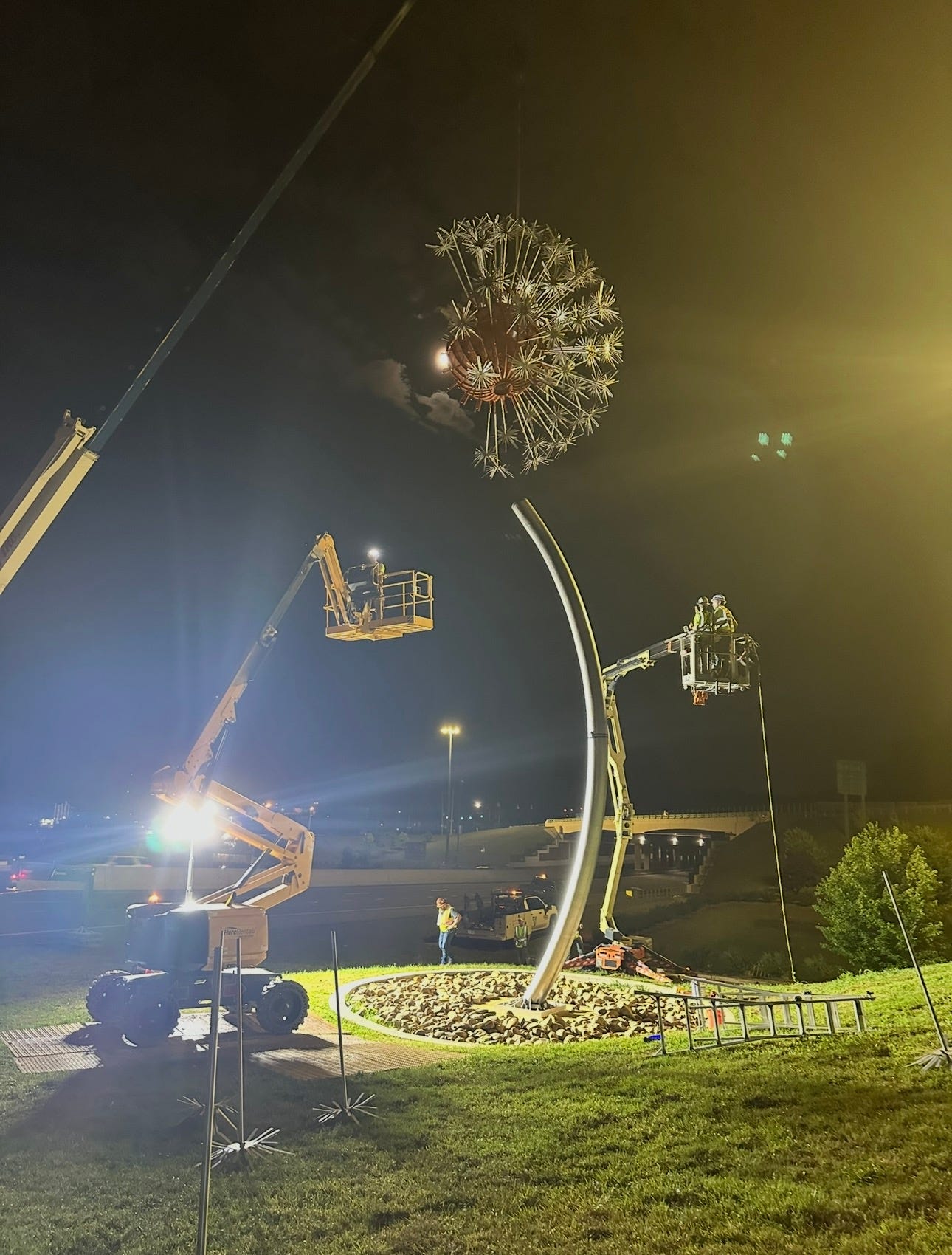
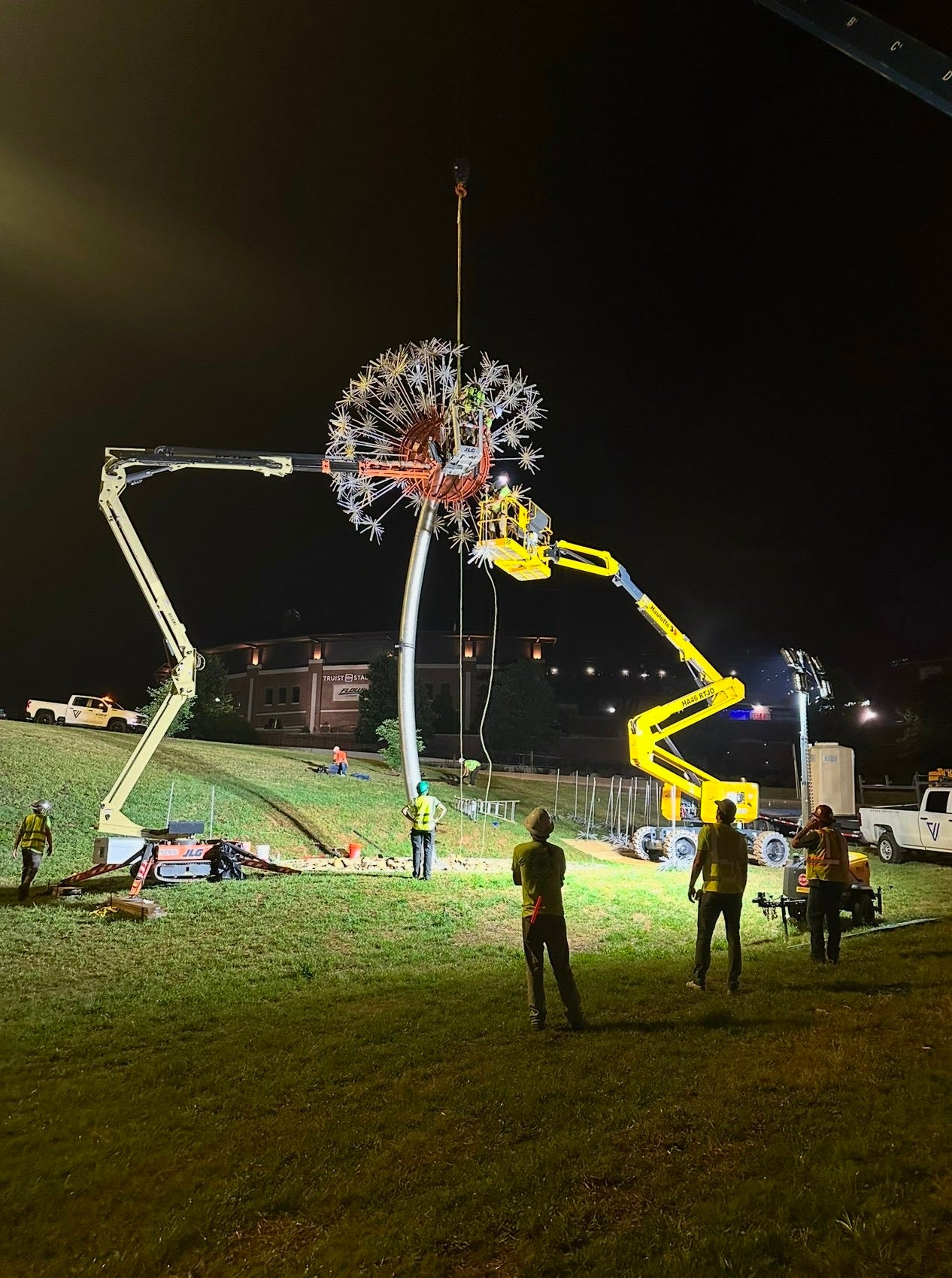
Much of the discussion has focused on the cost of the sculpture. Less attention has been paid to where that money went.
Not into a hole or out of state but to welders, engineers, painters, fabricators, designers, suppliers, truck drivers, rental companies, landscape architects, and small businesses. Into people who live here, work here, raise families here, and contribute to the character and economy of this city every day.
When people ask whether the dandelions were worth it, I sometimes wonder if they realize they are asking whether people like these are worth investing in. Whether creativity, craftsmanship and the identity Winston-Salem has spent decades cultivating is worth investing in.
I do not believe public art is more important than housing.
I do not believe it is more important than education.
I do not believe it is more important than feeding people.
I reject the idea that a city must choose between art and meeting human needs.
A city is not merely a machine for survival or at least it shouldn’t be.
We live in a time when people are working harder than ever and still struggling to afford the basics. A time when abundance exists alongside hunger, when luxury developments rise while people sleep outdoors. A time when exhaustion has become so common that it often feels normal.
And if the discourse surrounding these dandelions causes us to take a harder look at the systems that produce poverty, hunger, and homelessness in the first place, that is a conversation worth having.
Those problems deserve our constant attention, our resources, and our political will more than being invoked whenever a new public artwork appears.
Perhaps the better question is not why we spend money on art but why, in one of the wealthiest societies in human history, so many people are still struggling to meet their basic needs.
That is not a failure of public art. It is a failure of policy, of imagination, and a failure to reckon with who truly benefits from the great wealth and prosperity we collectively create.
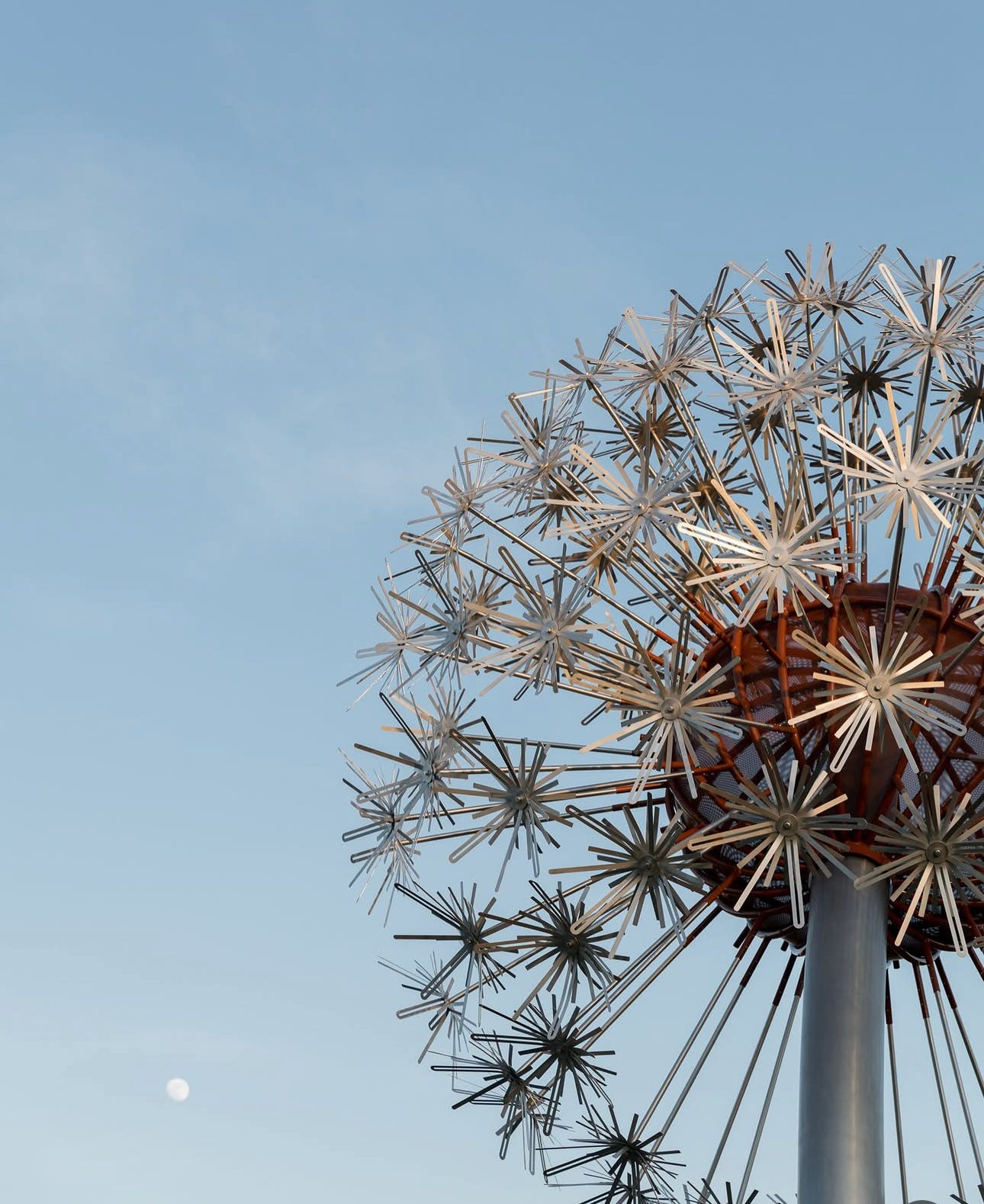
Dandelions ribbon-cutting ceremony - Tuesday, June 9th 10am behind Truist Stadium on the Twin City Trail.